Rotating parts: impellers, casings, rotors and shafts
First In Service makes impellers, casings, rotors, shafts and fan components in Tallinn, Estonia. Impellers reach Ø 4,000 mm (157 in) and shafts 3,250 mm (128 in). Parts are turned up to Ø 2,700 mm (106 in). Larger impellers are finish-machined on the FERMAT WRF 130 boring mill. Welded parts are stress-relieved, and rotating parts are dynamically balanced up to Ø 4,000 mm and 4,000 kg (8,800 lb). We work in carbon steel, stainless, duplex, super duplex and titanium, with inspection by VT, PT, MT, UT and RT. If the original drawing is missing, spare impellers and rotors can be reverse-engineered from the worn part.
Key takeaways
First In Service (Tallinn, Estonia, EU) is a contract manufacturer of large rotating parts for fans, blowers, compressors, pumps and turbines. It makes impellers up to Ø 4,000 mm and shafts up to 3,250 mm. Dynamic balancing covers parts from 25 to 4,000 kg. Lead times start from 6 weeks.
- Parts: fan and blower impellers, rotors, shafts and hubs; pump, compressor, turbine and bearing casings.
- Impellers: up to Ø 4,000 mm; turned to Ø 2,700 mm, larger sizes finish-machined on the FERMAT WRF 130.
- Shafts: up to 3,250 mm long and Ø 1,000 mm.
- Balancing: dynamic, 25–4,000 kg, up to Ø 4,000 mm; smallest measurable unbalance 0.1 g; report per correction plane.
- Process: welding to EN ISO 3834-2, routine PWHT, NDT (VT, PT, MT, UT, RT). EN 10204 3.1 certificates, 3.2 on request.
- No drawing: spare impellers reverse-engineered from the worn part, with 3D model and drawings.
- Lead time: from 6 weeks, depending on material, size and scope. Road delivery takes 3–4 days to Germany and the Netherlands, 2–3 days to Norway and 1–2 days to Finland.
- Response: an engineer replies within 1 working day; firm quote within 5 working days.
First In Service makes impellers up to Ø 4,000 mm (157 in). Rotating parts are turned up to Ø 2,700 mm (106 in) and 1,900 mm (75 in) high. Shafts are turned up to 3,250 mm (128 in) long. Tolerances reach ±0.02 mm (±0.0008 in) in stainless steel, duplex, super duplex, Inconel, Hastelloy and titanium. Vertical turning up to Ø 2,700 mm (106 in) runs on the SC27 lathe. The FERMAT WRF 130 floor-type boring mill (X 13,500 mm) finish-machines larger impellers and housings. Welded parts are stress-relieved. Rotating parts are dynamically balanced up to Ø 4,000 mm (157 in) and 4,000 kg (8,800 lb). The same facility fabricates welded structures up to 35 × 7 × 7 metres (115 × 23 × 23 ft) and 160 tonnes (353,000 lb). Welding and machining stay under one roof.
Rotating parts we machine.
The list is not exhaustive. If the part is round, heavy and tightly toleranced, send the drawing.
From the workshop: Rotating parts & shafts
Click a photo to enlarge.
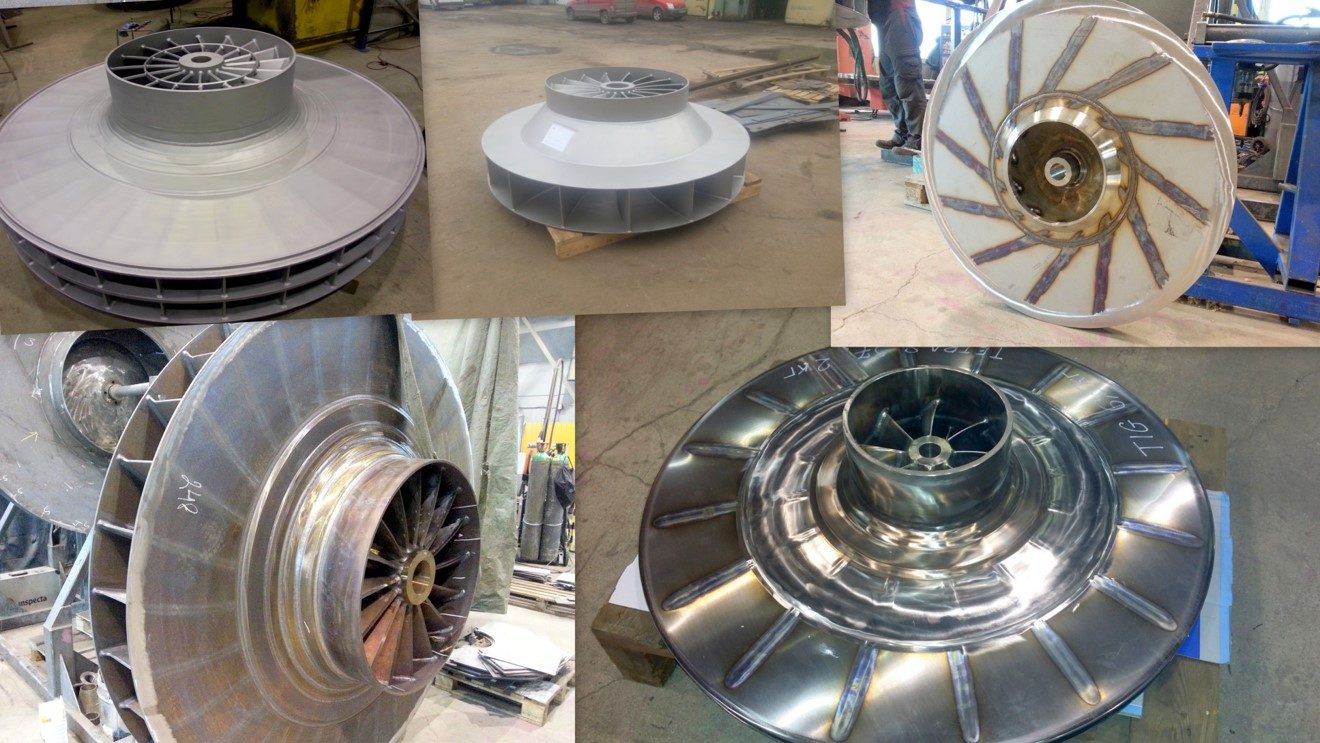
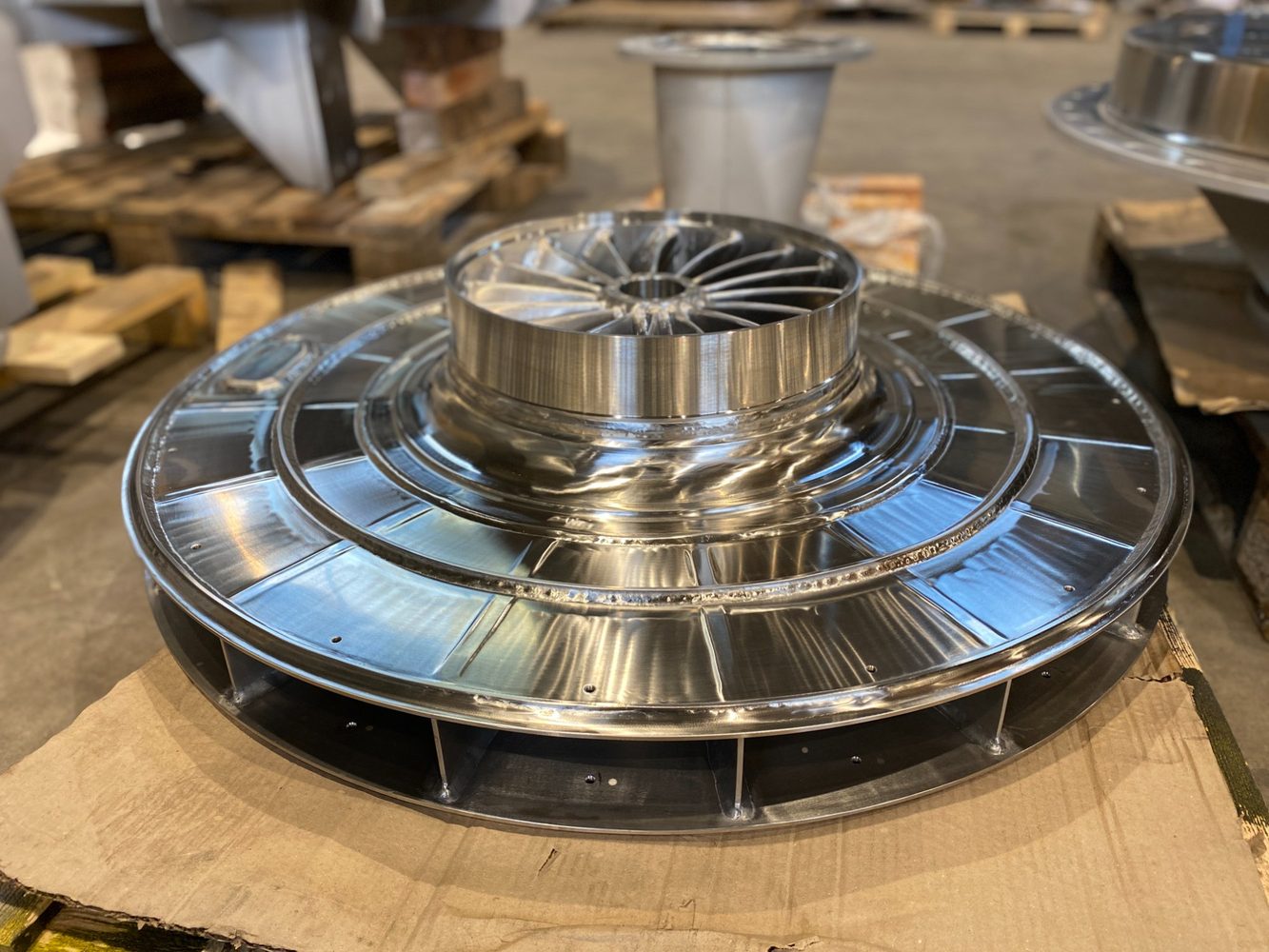
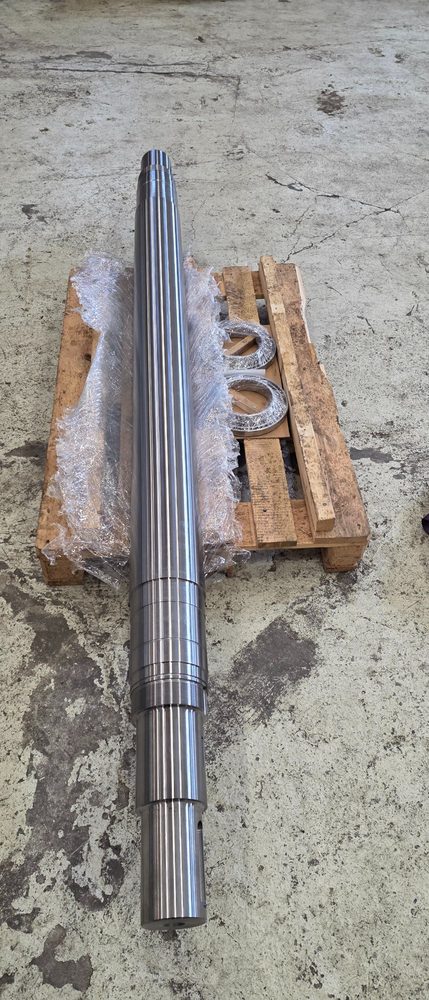
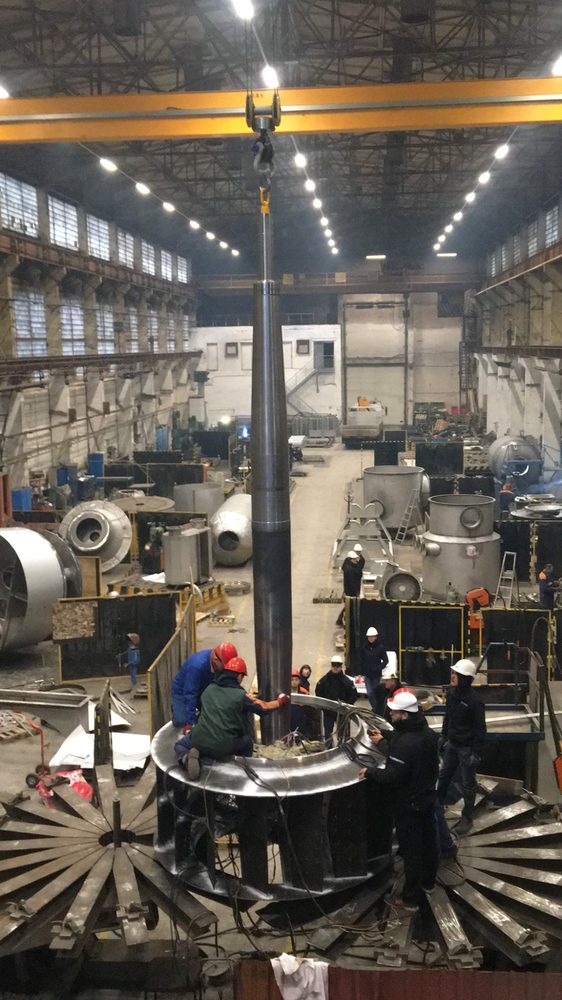
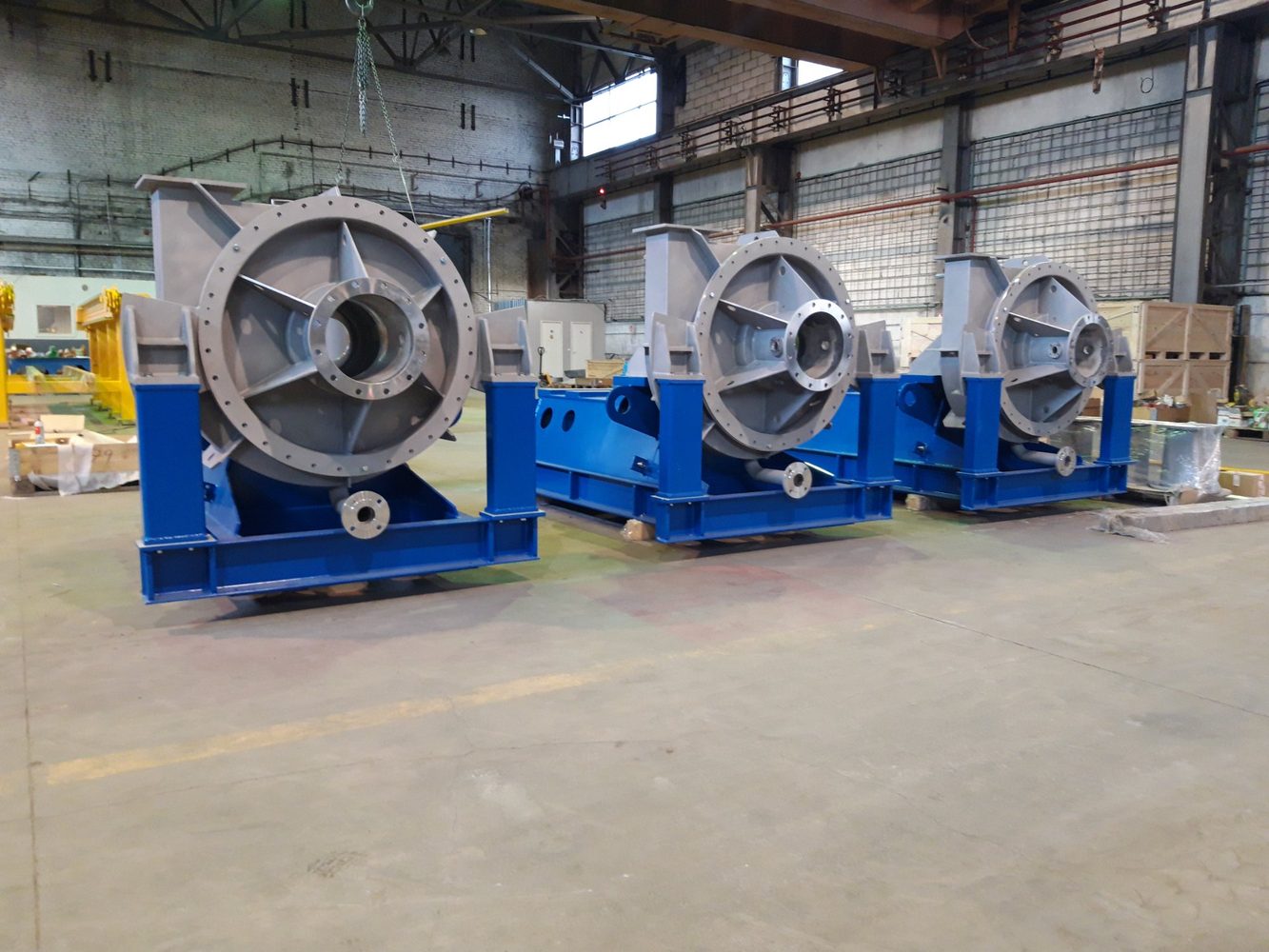
On rotating parts, the tolerance is the product.
Rotating equipment fails expensively. Think of a pump casing machined a hundredth out of true. Or a shaft whose residual stress is released after the final pass. Or an impeller in the wrong alloy for the service fluid. Each can cause an unplanned outage that costs days of lost production, far more than the price of the part. So what you really pay for is dimensional certainty and verified material. You also pay for a supplier who understands why the tolerance is written where it is.
Impellers up to Ø 4,000 mm, stress-relieved and balanced.
Impellers up to Ø 4,000 mm (157 in) are made in one order. It covers welding to EN ISO 3834-2, stress relieving, finish machining and dynamic balancing. An impeller of that size rarely needs a full turning operation. The hub, bore and mating faces are finish-machined on the FERMAT WRF 130 floor-type boring mill or another machine in the park. Parts up to Ø 2,700 mm (106 in) can be turned on the SC27 vertical lathe.
Stress relieving (post-weld heat treatment, PWHT) is a routine step in our process, not an option on request. It is carried out at our Tallinn site together with heat-treatment partners. Relieving welding stresses before final machining reduces the risk of the part distorting after the last cut. Grinding and polishing are done by certified partners within the same order, so you still deal with one supplier.
Shafts machined to drawing, up to 3,250 mm long.
The PUMA 700LY II horizontal turning centre turns shafts up to 3,250 mm (128 in) long and Ø 1,000 mm (39 in). Its live tooling adds milled features in the same setup. Hubs, flanges and rings up to Ø 2,700 mm (106 in) are turned on the SC27 vertical lathe.
- Size: up to 3,250 mm long and Ø 1,000 mm.
- Machine: PUMA 700LY II horizontal turning centre; live tooling cuts milled features in the same setup.
- Tolerance: down to ±0.02 mm where the fit requires it.
- Materials: carbon steel, stainless steel, duplex, super duplex, Inconel, Hastelloy and titanium.
- Balancing: rotors from 25 to 4,000 kg are dynamically balanced within the same purchase order as the machining.
- Documentation: dimensional report and EN 10204 3.1 material certificates (3.2 on request); NDT by certified partners.
- No drawing: a shaft can be reverse-engineered from the worn part, with a 3D model and drawings.
- Lead time: from 6 weeks, depending on material, size and scope.
A 3-metre shaft or a 40-tonne housing gets a setup plan before it goes on the machine. The plan sets how the part is supported, so its own weight does not distort the datum. It sets the order of cuts, so residual stresses are released early rather than after the final pass. And it places dimensional checks where they catch drift while there is still material to correct it.
Dynamic balancing up to Ø 4,000 mm and 4,000 kg.
Impellers, rotors and fan components are dynamically balanced in the same order. The limits are Ø 4,000 mm (157 in) and 4,000 kg (8,800 lb). One supplier is responsible for both machining and balancing. The balancing range starts at 25 kg (55 lb), and the smallest measurable unbalance is 0.1 g. When you send the enquiry, state the balance grade your drawing or specification requires.
What you receive with every rotating part
- Balancing report: rotor mass, balancing speed, balance grade and residual unbalance per correction plane
- Dimensional inspection report
- Material certificates to EN 10204 3.1 (3.2 on request)
- NDT reports (VT, PT, MT, UT, RT) from certified partners
- Stress-relieving (PWHT) record and weld documentation to EN ISO 3834-2
- 3D model and drawings (reverse-engineered parts)
No drawing? We reverse-engineer spare impellers and rotors from the worn part →
Large rotating components, machined and documented in one place.
We machine impellers up to Ø 4,000 mm (157 in), pump and compressor casings, rotor and shaft systems and turbine housings. Turning reaches Ø 2,700 mm (106 in), and shafts can be up to 3,250 mm (128 in) long. We hold ±0.02 mm (±0.0008 in) where the fit demands it. Fabrication, machining and assembly happen in one 18,000 m² (194,000 sq ft) facility in Tallinn. A welded-and-machined assembly stays under one roof from plate to FAT.
Typical scope
Relevant equipment
Materials
What this work runs on.
Heavy fabrication
Up to 35 × 7 × 7 m (115 × 23 × 23 ft) and 160 tonnes (353,000 lb). EN ISO 3834-2, EN 1090-2.
Heavy fabrication →CNC machining
Turning Ø 2,700 mm (106 in). Milling 13,000 mm (512 in) long and 4,500 mm (177 in) high. Tolerance ±0.02 mm (±0.0008 in).
CNC machining →Specifications at a glance
| Rotating parts | Impellers up to Ø 4,000 mm (157 in), rotors, fan and blower components |
|---|---|
| Impellers | Up to Ø 4,000 mm (157 in); turned to Ø 2,700 mm (106 in), larger sizes finish-machined on the FERMAT WRF 130 |
| Stress relieving | Post-weld heat treatment (PWHT), routine for welded parts; done at our site with heat-treatment partners |
| Grinding and polishing | By certified partners, within the same order |
| Shafts | Up to 3,250 mm (128 in) long and Ø 1,000 mm (39 in), turned with live tooling |
| Casings and housings | Pump, compressor, turbine and bearing housings |
| Balancing | Dynamic, 25–4,000 kg (55–8,800 lb), up to Ø 4,000 mm (157 in); smallest measurable unbalance 0.1 g |
| FERMAT WRF 130 | Floor-type boring mill, X 13,500 mm (531 in) — housings and frames |
| SC27 VTL | Vertical turning to Ø 2,700 mm (106 in) — rings, flanges, hubs |
| PUMA 700LY II | Horizontal turning, live tooling, L 3,250 mm (128 in) |
| ZAYER XIOS 4000 | Bed-type CNC milling, X 4,000 mm (157 in) |
| Corrosion-resistant | Duplex, super duplex, stainless |
| Speciality alloys | Inconel, Hastelloy, titanium |
| Traceability | EN 10204 3.1 standard, 3.2 on request |
Questions buyers of rotating parts ask
What is the largest impeller First In Service can make?
Impellers up to Ø 4,000 mm (157 in). Parts up to Ø 2,700 mm (106 in) are turned on the SC27 vertical lathe. Larger impellers do not need a full turning operation. They are finish-machined on the FERMAT WRF 130 floor-type boring mill or other machines. Welded impellers are stress-relieved and dynamically balanced up to 4,000 kg (8,800 lb). Tolerances go down to ±0.02 mm (±0.0008 in) in stainless steel, duplex, super duplex, Inconel and titanium.
Can you machine large shafts to drawing, and up to what size?
Yes, shafts up to 3,250 mm (128 in) long and Ø 1,000 mm (39 in). They are turned on the PUMA 700LY II horizontal turning centre, with live tooling for milled features in the same setup. Shafts are made to your drawing or 3D model. They ship with a dimensional report and EN 10204 3.1 material certificates (3.2 on request). Without a drawing, a shaft can be reverse-engineered from the worn part.
Do you manufacture components for hydropower and turbines?
Turbine housings, rotor and shaft systems and casings are within our 160-tonne (353,000 lb), 35-metre envelope, with full material traceability.
What documentation ships with rotating parts?
Rotating parts ship with a balancing report. It lists rotor mass, balancing speed, balance grade and residual unbalance per correction plane. You also receive a dimensional inspection report and EN 10204 3.1 material certificates (3.2 on request). NDT reports (VT, PT, MT, UT, RT) come from certified partners. For welded parts, the stress-relieving (PWHT) record is included. Reverse-engineered parts also come with the 3D model and drawings.
Do you balance rotating parts?
Yes. First In Service dynamically balances rotating parts from 25 kg to 4,000 kg (55–8,800 lb). Parts can be up to Ø 4,000 mm (157 in). The smallest unbalance it can measure is 0.1 g. When you send the enquiry, state the balance grade your drawing or specification requires.
Are welded impellers stress-relieved?
Yes. First In Service stress-relieves welded impellers and fabrications as a routine step (post-weld heat treatment). It is carried out at our Tallinn site together with heat-treatment partners. It is done before final machining, so the part does not distort after the last cut.
Do you grind and polish impellers?
Grinding and polishing are done by certified partners within the same order. First In Service remains your single supplier and point of contact.
What balance grade should I specify?
Use the grade on your drawing or in the equipment specification. If none is given, ISO 21940-11 lists guidance grades by machine type, such as G6.3 for fans and pumps. ISO 14694 sets the grades for industrial fans. Our buyer's guide shows how to turn a grade into a permissible residual unbalance.
Fan and blower impellers
First In Service makes fan and blower impellers and other turbomachinery components to drawing. Impellers reach Ø 4,000 mm and shafts 3,250 mm. They are welded, stress-relieved, finish-machined and dynamically balanced up to 4,000 kg in one order.
In short
First In Service is a contract manufacturer of large rotating parts in Tallinn, Estonia. We make impellers up to Ø 4,000 mm and turn parts up to Ø 2,700 mm and shafts up to 3,250 mm long. Welded parts are stress-relieved before final machining. In the same order, rotating parts are dynamically balanced from 25 to 4,000 kg and up to Ø 4,000 mm. Tolerances reach ±0.02 mm in stainless steel, duplex, super duplex, Inconel, Hastelloy and titanium. Each part ships with a balancing report, a dimensional report and EN 10204 3.1 material certificates. Welding follows EN ISO 3834-2. Without a drawing, we can reverse-engineer the part from a worn sample. Lead times start from 6 weeks, and road delivery to Germany takes 3–4 days. Send your drawing: an engineer replies within one working day.
Primary sources: ISO 21940-11 · ISO 14694 · EN ISO 3834-2 · EN 10204
Send your drawings and specifications. An engineer replies within 1 working day and a firm quote follows within 5 working days.
Request a quoteBook a 20-minute call →Download capability overview (PDF)Published by First In Service OÜ, Tallinn · · Reviewed by Madis Kollo, Head of Sales & Business Development
