Marine, offshore & subsea manufacturing
First In Service builds azimuth thruster parts, propulsion housings, propeller shafts, rudder components and offshore structures in Tallinn, 20 km from Muuga Harbour. Parts are made in marine-grade, duplex and super duplex steels. They are coated to NORSOK M-501 and C5-M in-house and by certified partners. They can be built under DNV, Lloyd's Register, Bureau Veritas or RINA class per project.
Key takeaways
- Parts: azimuth thruster parts, propulsion housings, propeller shafts, rudder components and offshore structures, in marine-grade, duplex and super duplex steels.
- Class: parts built under DNV, Lloyd's Register, Bureau Veritas or RINA class, per project.
- Coating: shot-blasted and coated to NORSOK M-501 and C5-M in-house and by certified partners.
- Logistics: Tallinn site 20 km from Muuga Harbour, with lifting capacity up to 160 tonnes.
First In Service manufactures marine, offshore and subsea components in Tallinn, Estonia: welded structures up to 35 × 7 × 7 metres and 160 tonnes, and machined parts up to Ø 2,700 mm in turning, and up to 13,000 mm long and 4,500 mm high in milling, to ±0.02 mm. Certified to EN ISO 3834-2, EN 1090-2 and PED 2014/68/EU, with classification society scope agreed per project (DNV, Lloyd’s Register, Bureau Veritas, RINA). Muuga Harbour is 20 km away by direct heavy-haul road.
Steel fabrication for ships and shipyards.
First In Service fabricates and machines steel structures for ships and shipyards: thruster foundations, deck structures and deck equipment, rudder components, propulsion housings and propeller shafts. Welding is certified to EN ISO 3834-2 and EN 1090-2 EXC3. Parts can be built under DNV, Lloyd's Register, Bureau Veritas or RINA class, per project. The site is 20 km from Muuga Harbour, and road delivery takes 3–4 days to Germany and the Netherlands and 2–3 days to Norway.
Parts we manufacture for marine and offshore.
If your component is not listed, it is still worth asking: the envelope, materials and documentation matter more than the part name.
From the workshop: Marine, Offshore & Subsea
Click a photo to enlarge.
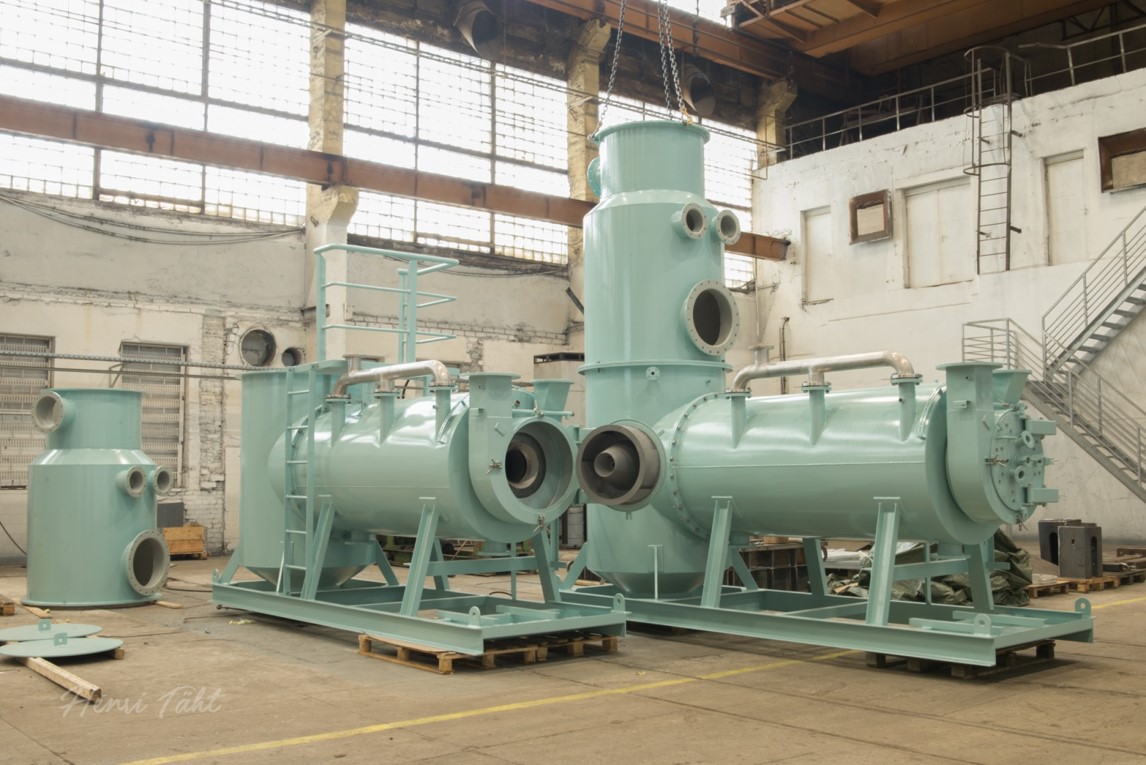
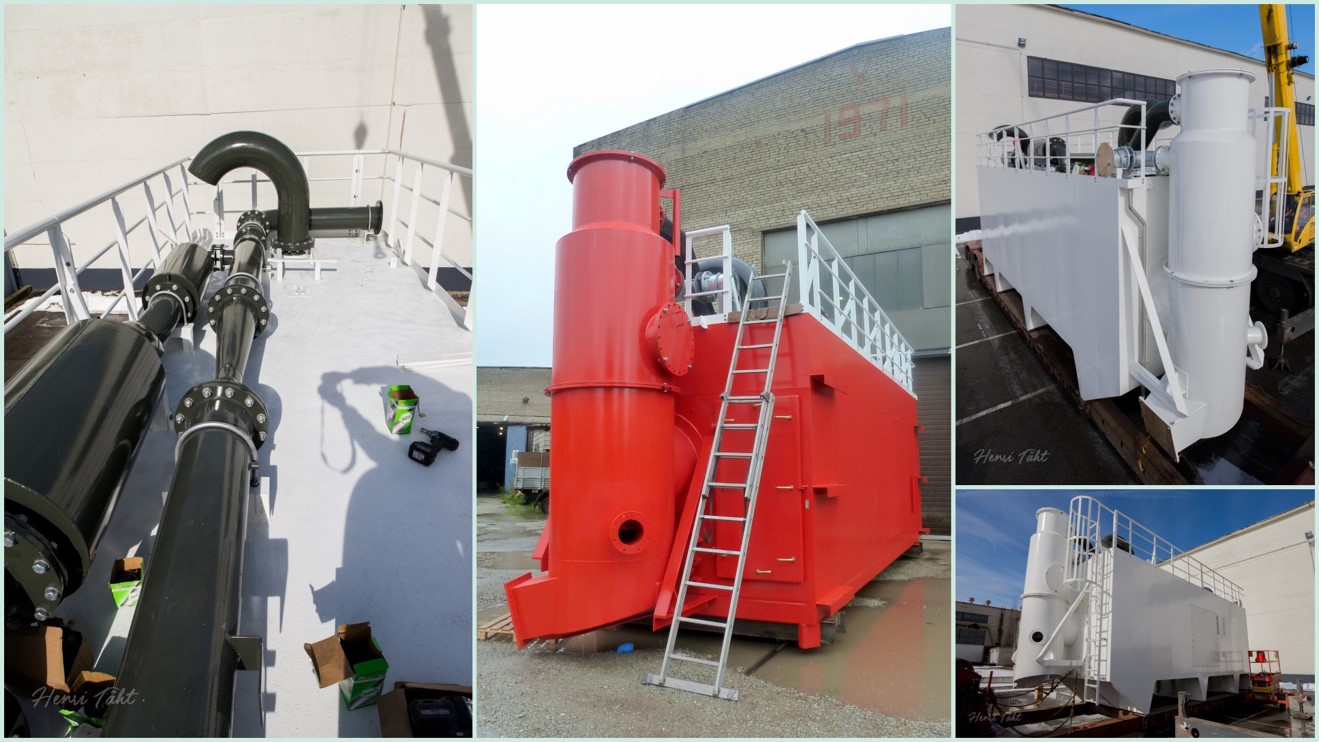
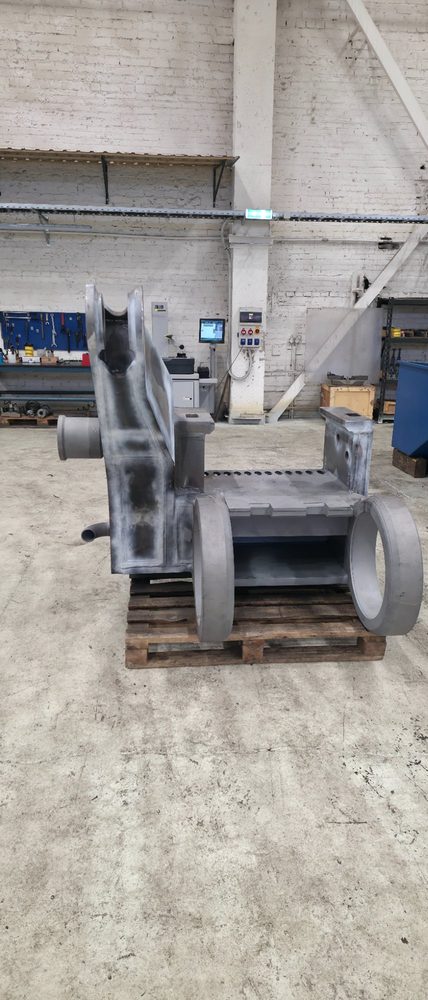
Salt water does not forgive shortcuts.
A thruster housing that fails in service means a vessel off charter and a dry-dock bill that dwarfs the component's price. A coating system that underperforms in the splash zone means corrosion claims years before scheduled maintenance. So marine and offshore buyers care less about the cheapest machining hour than about taking the supplier out of the risk equation. That means classification society compliance, materials that match the certificates that accompany them, and coating systems tested for the actual service environment.
One contract, from plate to classed component.
Fabrication, machining and assembly happen in one 18,000 m² facility in Tallinn. That means one audit covers the core production chain and one contract carries single-point accountability. We machine propulsion components to ±0.02 mm and fabricate structures to 35 × 7 × 7 m and 160 tonnes. We apply NORSOK M-501 / C5-M coating systems in-house and with certified partners. Surveyors visit one address for fabrication, machining and assembly.
Typical scope
Relevant equipment
Materials
Standards & class
160 tonnes, 20 km to the ship.
Our facility sits 20 km from Muuga Harbour and 60 km from Paldiski Port. It has direct heavy-haul road access and no urban restrictions on oversized transport. For marine components, every kilometre between machine shop and quay adds schedule risk, handling risk and cost.
Specifications at a glance
| Propulsion | Azimuth thruster parts, propulsion housings, propeller shafts |
|---|---|
| Structures | Foundations, frames, rudder components, deck equipment |
| Subsea | Machined housings and structural elements to spec |
| FERMAT WRF 130 | Floor-type boring mill, X: 13,500 mm — housings and frames |
| SC27 VTL | Vertical turning up to Ø 2,700 mm — slewing rings, hubs |
| Welding | 135/136, TIG, SAW for plate 100 mm and thicker — EN ISO 3834-2 certified |
| Surface treatment | Shot-blasting and NORSOK M-501 / C5-M coating in-house and with certified partners |
| Corrosion-resistant | Duplex, super duplex, CuNi alloys |
| Steels | Marine-grade steels, stainless, carbon steel |
| Traceability | EN 10204 3.1 standard, 3.2 on request |
| Classification | DNV, Lloyd's Register, Bureau Veritas, RINA — per project scope |
| Welding quality | EN ISO 3834-2, EN 1090-2 |
| Coating | NORSOK M-501, C5-M |
Questions marine buyers ask
Can First In Service manufacture components for classed vessels?
Yes. We manufacture to classification society requirements including DNV, Lloyd's Register, Bureau Veritas and RINA, with the survey and documentation scope defined per project.
What marine propulsion components can you produce?
Azimuth thruster parts, propulsion housings, propeller shafts, rudder components and structural elements, machined to ±0.02 mm where the fit demands it.
What corrosion protection do you provide for offshore environments?
Surface treatment is carried out in-house and with certified partners. It ranges from shot-blasting to coating systems that meet NORSOK M-501 and corrosivity category C5-M. NORSOK M-501 and C5-M are the requirements written for splash-zone and subsea service.
What materials do you work with for marine and subsea applications?
Stainless steel, duplex and super duplex, marine-grade steels, and CuNi alloys, with full EN 10204 3.1/3.2 material traceability.
How large can marine structures be?
Marine structures can be up to 35 × 7 × 7 metres and 160 tonnes. There is heavy-haul road access to Muuga Harbour, 20 km away, and ro-ro shipping for oversized loads.
Do you manufacture large metal structures for shipbuilding?
Yes. In Tallinn, Estonia, we manufacture welded and machined steel structures for ships and shipyards, up to 35 × 7 × 7 metres and 160 tonnes. Muuga Harbour is 20 km away, and oversized loads ship by ro-ro.
The same facility, with the evidence each sector asks for.
Rotating parts & shafts
Impellers, casings, rotors, shafts and turbine housings to ±0.02 mm.
Rotating parts & shafts →Mining & machine building
Crusher frames, conveyor structures and wear-resistant steel assemblies.
Mining & machine building →Primary sources: NORSOK M-501 · ISO 12944 · EN 1090-2
Send your drawings and specifications. We reply within 1 working day and send a firm quote within five working days.
Request a quoteBook a 20-minute call →Download capability overview (PDF)Published by First In Service OÜ, Tallinn · · Reviewed by Madis Kollo, Head of Sales & Business Development
